
One of the key elements for a product to succeed in the marketplace is to choose the correct Go-To-Market strategy for the product. Even though it is true for all products, it is even more important to select the right go-to-market strategy for the enterprise products, as the business-to-business (B2B) product sales cycle is usually long. Additionally, since most B2B products are sold through a human connection, it is important to understand pros and cons of all available options before investing in the required resources. If the product is developed within a large organization with paying customers, it is logical to use the existing sales team to reach out to the existing customers to introduce the product to the marketplace. Even then it is important to look at other options such as OEM (Original Equipment Manufacturer) partnerships as well as reseller channels.
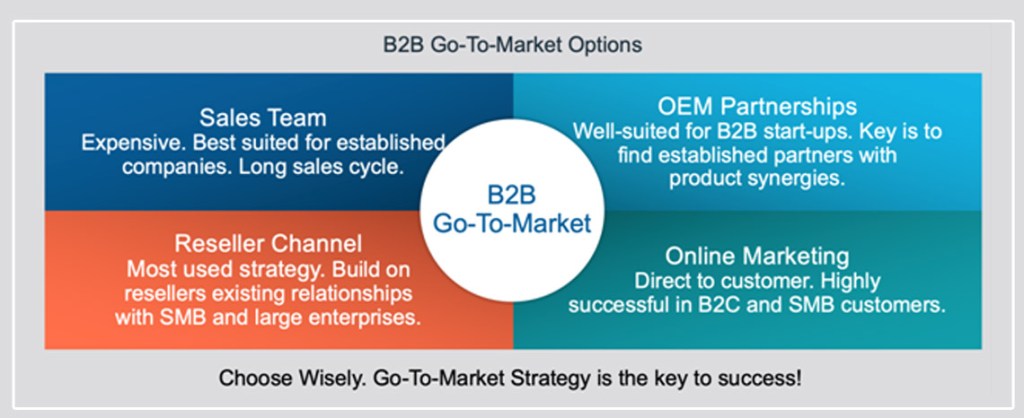
Here are a few points to consider when choosing a GTM strategy for a B2B product launch.
- Is there a proven GTM strategy in the marketplace used by the competitors?
- Does the product complement an established OEM’s product? If yes, is the OEM currently in a partnership with another vendor? If no, reach out to the OEM for a strategic partnership.
- If the product is marketed to SMB (small and medium size businesses), a reseller channel may be a good option to explore.
- If the product is marketed to the large enterprises, make sure to secure strong references from the existing customers to showcase the product to such prospective customers.
- In most large enterprises, all new vendors are required to go through a list of checks, certifications and compliance requirements. Make sure that your business plan supports such costs and time required to sell using direct sales to the large enterprises as your GTM strategy.
 Welcome to Utkarsh Kansal's Business Blog